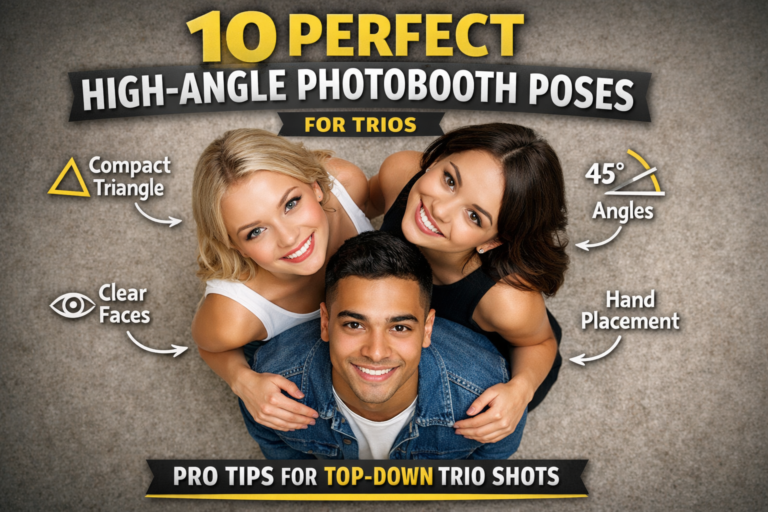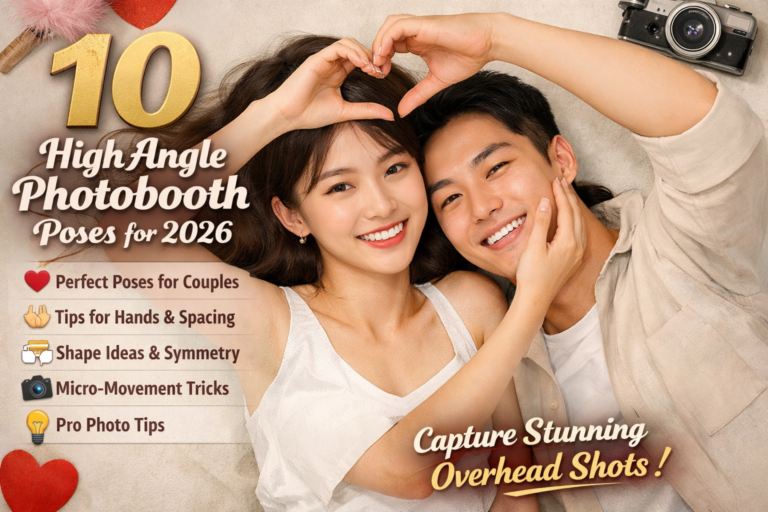
Introduction
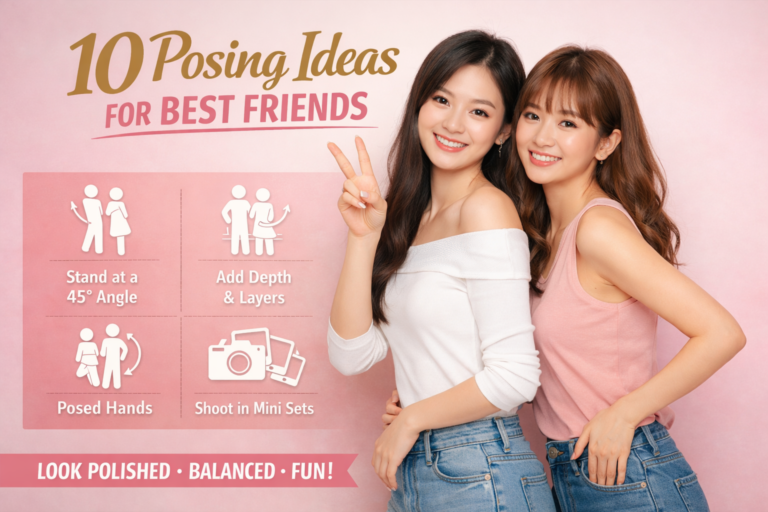
Two-friend photos are deceptively hard to get right—especially in a studio or photobooth setup where you want the shots to look polished, balanced, and intentional (not awkward or overly “posed”). The good news is that you only need a handful of repeatable foundations to get consistently flattering results: keep both friends standing, set the body line at a 45° angle, and make sure both faces are clearly visible by looking directly at the camera.
This guide gives you 10 pose ideas built specifically for that formula. Each pose is designed to work fast, look clean from frame to frame, and create variety through micro-adjustments (small role swaps, head tilts, or hand changes) instead of full pose resets. The result: a mini set of images that feel cohesive, premium, and genuinely fun—without chaos.
Key Takeaways
- Start with structure: Keep both friends standing, aligned to the same corner at a 45° angle, and looking at the camera to maintain symmetry and clarity.
- Use “depth” for instant polish: A simple half-step forward/half-step back creates flattering dimension without breaking the composition.
- Hands should add lines, not distractions: Prioritise clean placements—inside arm link, hands at chest/centre waist, one hand on hip, one relaxed—and avoid covering eyes or brows.
- Shoot in mini-sequences: Most poses naturally produce strong variety in 3 frames (soft smile → bigger smile → laugh, or serious → smile → playful).
- Micro-variations beat full resets: Swap who’s forward, change head tilt direction, or raise/lower linked hands to generate new looks quickly.
- Keep gestures camera-readable: Pointing, peace signs, and high-fives should stay low enough to avoid faces and high enough to “read” clearly from above.
- Balance playful with premium: Pair one playful element (peace sign, point, high-five) with one clean anchor (hip hand, relaxed arm) so the image still looks intentional.
- Consistency creates a “set”: Repeating the same stance rules across all 10 poses makes the final gallery feel cohesive and professionally styled.
1) Diagonal Bestie Link
Body placement
- Stand side-by-side, both angled to the same corner.
- Friend A is half-step forward, Friend B half-step back.
Hands - Link inside arms (elbow hook) OR hold hands at centre-waist (not too low).
- Outside hands: one on hip, one relaxed by thigh.
Face + expression - Both look up at camera.
- Frame 1: soft smile. Frame 2: bigger smile. Frame 3: laugh.
Micro-variations - Switch who is forward.
- Slight head tilt toward each other for one frame only.

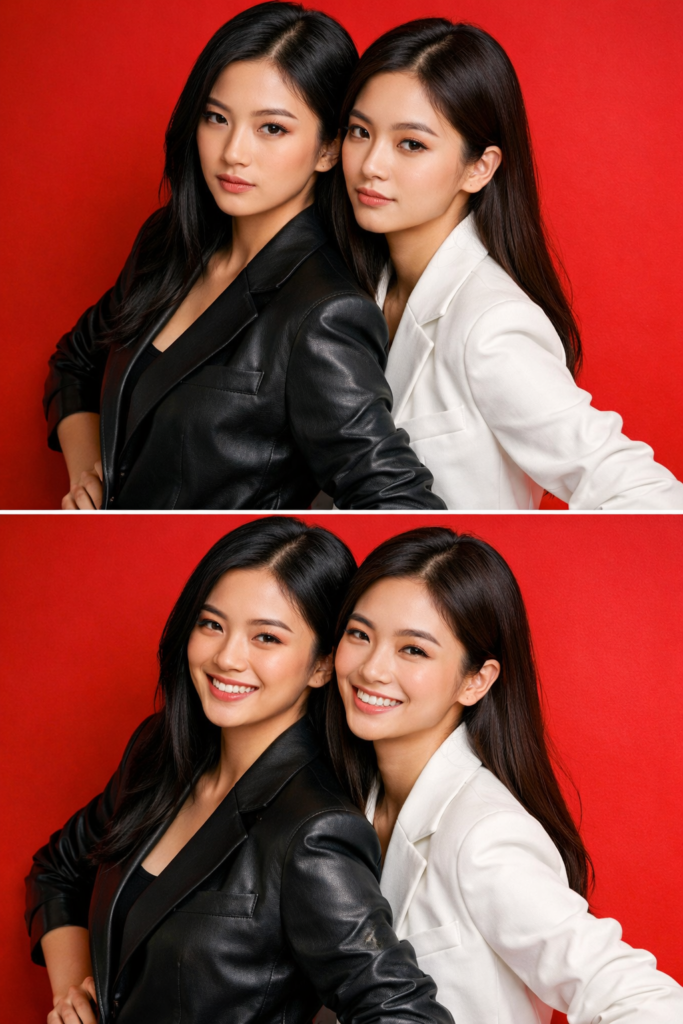
2) Shoulder-to-Shoulder “Power Besties”
Body placement
- Shoulders touch, bodies at 45°.
- Friend A slightly in front; Friend B slightly behind.
Hands - Both place outside hand on hip (strong line).
- Inside hands: either relaxed by side or lightly touching the other’s forearm.
Face + expression - Both look at camera with a confident, calm expression.
- Then do one “smile switch” frame (sudden bright smile).
Micro-variations - Both do neutral face + chin slightly down (strong).
- Then both grin + eyebrows up (playful contrast).
3) Diagonal “Cap/Bag/Accessory” Showcase
Body placement
- Side-by-side at 45°, heads close but not overlapping.
Hands - Each friend highlights an accessory:
- One holds a bag strap or jacket lapel.
- The other adjusts cap brim or touches necklace.
- Keep hands away from eyes.
Face + expression - Both look up at camera; small smile.
Micro-variations - Frame 1: both “model face.”
- Frame 2: both laugh.
- Frame 3: one points at the other’s accessory (index finger near cheek level, not blocking).

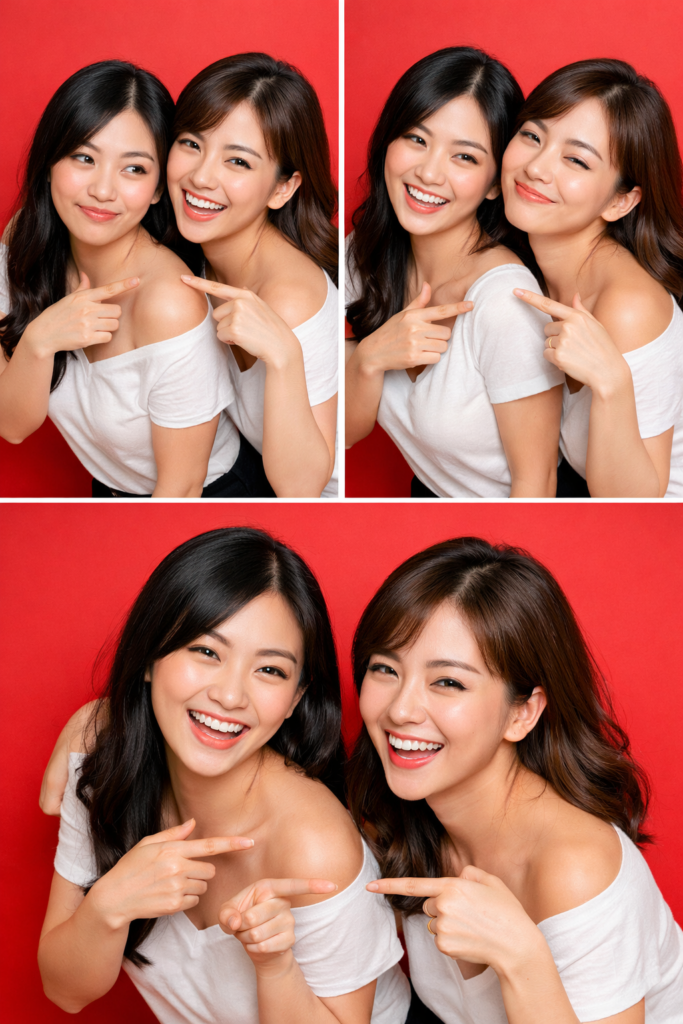
4) “Point at My Bestie”
Body placement
- Friend A slightly forward, Friend B slightly behind; both angled the same way.
Hands - Friend A points at Friend B with a bent elbow (keep finger below chin line).
- Friend B does a small “me?” gesture: hand on chest or a subtle shrug.
Face + expression - Both look at camera.
- A smiles; B does playful smug face, then both laugh.
Micro-variations - Swap roles (B points, A reacts).
- Do one frame with both pointing at each other (hands kept low).
5) Double “Face Frame”
Body placement
- Cheek-to-cheek or very close side-by-side, still at 45°.
Hands (important) - Each friend uses outside hand to form an “L” or soft curve framing the face.
- Hands sit wide around the face, never over the eyebrows/eyes.
- Inside hands rest at waist/hip.
Face + expression - Both look up at camera; smile.
Micro-variations - Frame 1: symmetrical frame.
- Frame 2: drop hands slightly and laugh.
- Frame 3: bring frame back but tilt heads opposite directions.

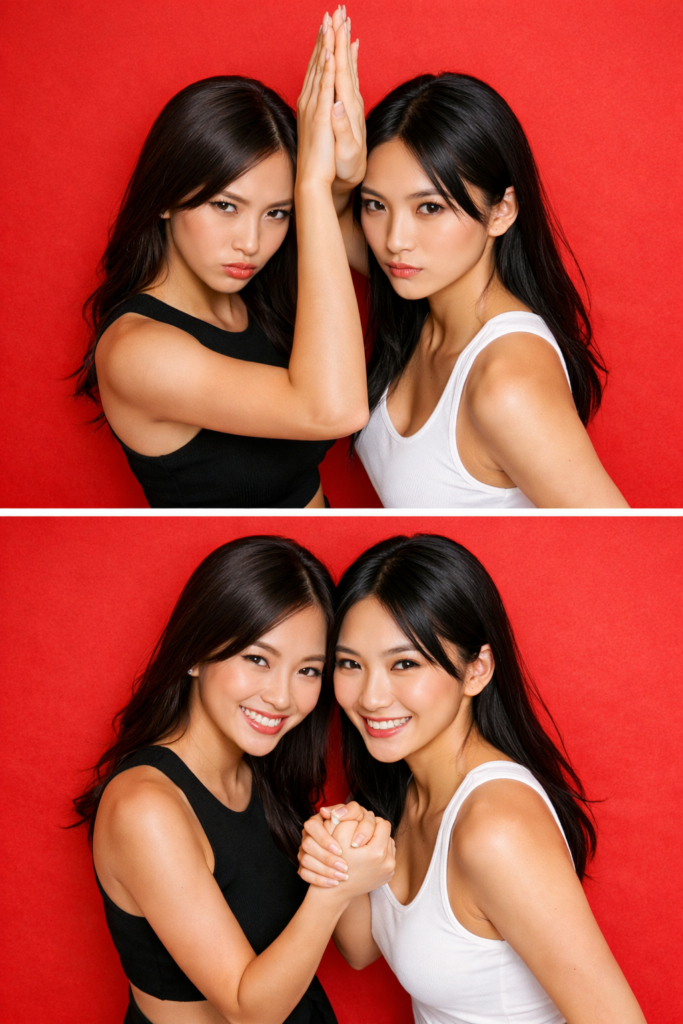
6) “High-Five Freeze”
Body placement
- Stand angled at 45°, but rotate shoulders slightly toward each other.
- Keep heads close enough to stay centred.
Hands - High-five hands meet above forehead level (so it reads clearly from above).
- Free hands: one on hip, one relaxed.
Face + expression - Both look at camera. Do “serious” first, then smile.
Micro-variations - After the high-five, keep hands connected and drop them slightly into a handshake for another frame (still looking at camera).
7) “Linked Hands at Chest Level”
Body placement
- Side-by-side at 45°, shoulders nearly touching.
Hands - Hold hands together at centre chest level, slightly forward.
- Outside hands: one touches collarbone/hair, the other hand on hip.
Face + expression - Both look up at camera, soft smile.
Micro-variations - Raise linked hands slightly higher (one frame).
- Lower to upper-waist (one frame) to create two distinct compositions.

8) “One Step Forward”
Body placement
- Both at 45°.
- Friend A takes a tiny step forward (10–15 cm) while Friend B stays back.
Hands - Friend A: one hand on hip, one relaxed.
- Friend B: one hand lightly on A’s shoulder/upper arm (gentle touch, not gripping).
Face + expression - Both look up at camera.
- A smiles; B smiles smaller (editorial contrast), then both laugh.
Micro-variations - Swap who steps forward.
- B’s hand moves from shoulder to forearm for a different line.

9) “Peace + Chic”
Body placement
- Side-by-side at 45°, heads close.
Hands - Friend A does a peace sign beside cheek (keep it away from eyes).
- Friend B keeps pose elegant: hand on hip or lightly touching hair.
Face + expression - Both look at camera; smile.
Micro-variations - Swap who does peace sign.
- Both do peace signs for one frame (keep them low and wide).
10) “Synchronized Head Tilt”
Body placement
- Side-by-side at 45°, shoulders touching.
Hands - Both keep hands minimal: one on hip, one relaxed.
Face + expression - Both look up at camera.
- Frame 1: both tilt heads inward (toward each other).
- Frame 2: both tilt heads outward (away from each other).
- Frame 3: return to neutral + laugh.
Micro-variations - Add a tiny shoulder lean together for one frame only.

Great two-friend photos come down to repeatable mechanics: a shared 45° stance, clean spacing, confident hand lines, and direct eye contact with the camera. Once those are locked in, the poses in this list become mix-and-match frameworks you can reuse anytime—whether you want a minimal editorial look (shoulder-to-shoulder power pose, linked hands at chest level) or something playful that still photographs cleanly (point at bestie, high-five freeze, peace + chic).
The real advantage is speed and consistency. Instead of reinventing poses, run each idea as a three-frame sequence and rely on micro-variations—swap who steps forward, change head tilt direction, adjust hand height—to create a full set that looks intentional, flattering, and fun. When two friends move together with small, controlled changes, you get variety without losing the premium feel.